
REVIEW · WALKING TOURS
Helsinki: Architecture Walking Tour with Expert
Helsinki tells its story in stone. This three-hour walk connects Senate Square, the railway station, Oodi, and more while showing how Finnish politics, climate, culture, and design shaped the city. I like the small group size, limited to six people, and I like that guide Emek adjusts his explanations to the interests of the people in front of him. The main consideration is the walking: you should be ready for 3 to 4 miles, or 5 to 6 kilometers, in weather that may be cold, wet, or both.
I also appreciate the balance between famous buildings and less obvious stops. You will see major works by Engel, Saarinen, and Alvar Aalto, but the tour also brings you inside several buildings, including the National Library and places connected with Finnish design and public life. At $70 per person, it is not a budget stroll, but the small group and strong guide-led commentary make it a sensible choice for anyone who wants more than photographs of pretty façades.
In This Review
- Five things to know before you book
- Why Helsinki works so well for an architecture walk
- Senate Square and the disciplined face of central Helsinki
- Engel, Saarinen, and the people behind the façades
- Central Railway Station and Helsinki’s national identity
- JugendHall and the Pohjola Insurance Building
- Academic Bookstore and Aalto’s modern Helsinki
- Oodi and Helsinki’s contemporary public spirit
- A small group and a guide who adjusts the pace
- Walking distance, weather, and the winter question
- Is $70 a fair price?
- Who should take this Helsinki walk?
- My verdict on Ataman Tours’ architecture experience
- FAQ
- How long does the Helsinki Architecture Walking Tour last?
- How far will I walk?
- What language is the tour conducted in?
- How many people can join the tour?
- Where is the meeting point?
- What buildings are included?
- Which architects are discussed?
- What should I bring?
- Does the tour operate in bad weather?
Five things to know before you book
- The route covers several centuries of design: Neoclassical, Gothic Revival, Art Nouveau, Jugendstil, Nordic Classicism, modernism, functionalism, and contemporary architecture all appear in central Helsinki.
- Emek is the guide to look for: His tours blend architecture with Finnish history, politics, culture, and everyday life, with a style that past participants found clear, friendly, and well paced.
- The group is limited to six: That gives you a better chance to ask questions and hear explanations than you would on a large city walk.
- You may enter important buildings: The National Library, the Central Railway Station, Pohjola Insurance Building, and Aalto-related interiors are part of the experience when conditions allow.
- The walk runs in every season: Comfortable shoes and weather-ready clothing matter, especially in winter, when temperatures can be severe.
- The meeting point is central: Find the corner of Aleksanterinkatu and Kluuvikatu, outside the Nanso Clothing Store at Aleksanterinkatu 9B.
Why Helsinki works so well for an architecture walk
Helsinki is unusually easy to read as a city. Its center is compact, and major buildings from different eras sit close enough together for you to compare them on foot. One moment you are facing the measured order of Neoclassical architecture. A few blocks later, the ornament and national feeling of Art Nouveau take over.
That variety gives the walk a clear purpose. You are not simply checking off buildings. You are learning to notice why a façade looks the way it does, what a building was meant to express, and how Finland’s changing political and cultural position affected its design.
I find the connection between architecture and daily life especially useful here. Helsinki’s buildings reflect ideas about education, government, commerce, transport, insurance, books, and public services. The tour makes those subjects easier to understand because you can see them in actual streets and interiors rather than only hearing dates and names.
The city also offers a good lesson in climate. Finnish architecture has to work through dark winters, snow, cold, and limited daylight. The exact design solutions will depend on the building, but the tour uses Helsinki’s setting to explain why practicality matters so much in local architecture.
More Walking Tours in Helsinki
- A Finntastic Walking Tour in Helsinki
★ 5.0 · 700 reviews - Epic Helsinki: English Speaking Walking Tour
★ 4.9 · 192 reviews - Helsinki walking tour with a city planner
★ 5.0 · 175 reviews
Senate Square and the disciplined face of central Helsinki
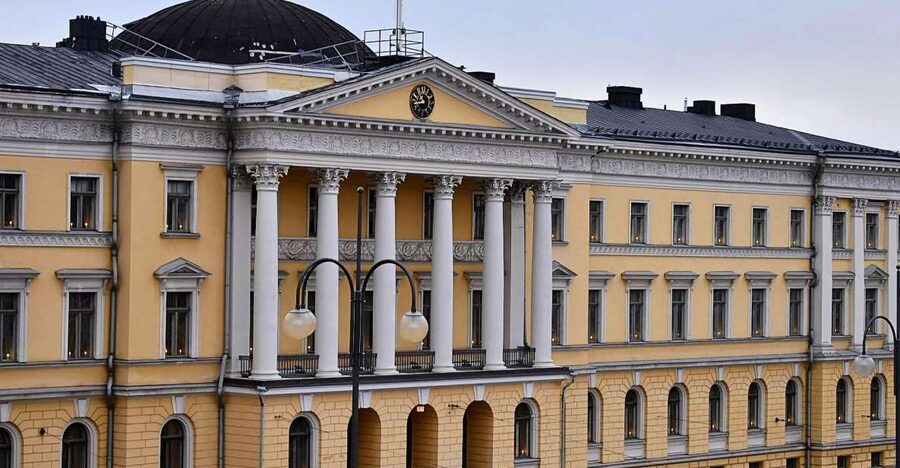
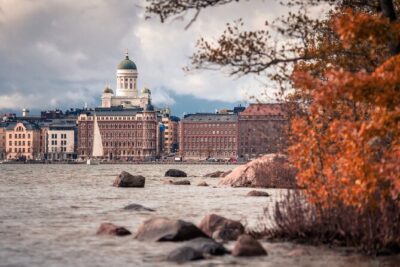
Senate Square is a natural starting point for understanding Helsinki’s Neoclassical center. The square gives you a broad, orderly view of monumental buildings and helps you see how architecture can express authority and national ambition.
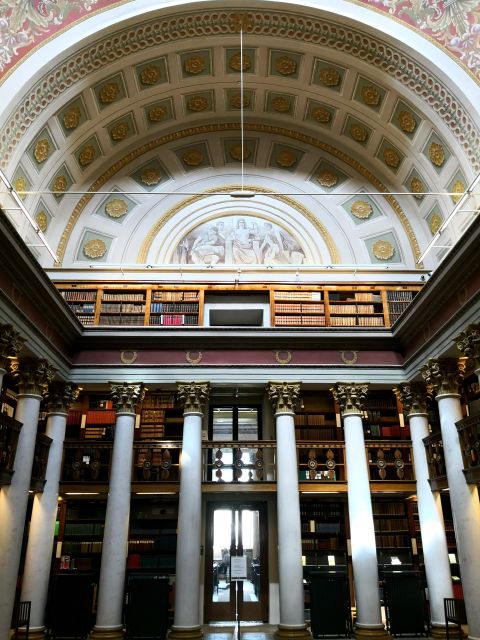
The National Library of Finland adds a more intimate stop to this grand opening. Its importance is not only visual. It connects architecture with learning, books, and the role of national institutions. You are encouraged to look beyond the exterior and consider how the building’s purpose affects its interior spaces and details.
This is one of the places where an expert guide earns the price of admission, even though there is no formal admission to the walk itself. A photograph can show you columns, steps, and symmetry. Emek’s commentary, as described by people who took his tour, helps explain why these choices were made and how the building fits into Finland’s story.
Do not expect to linger endlessly at every stop. Three hours sounds generous, but the route includes many locations and a fair amount of walking. The benefit is variety. The tradeoff is that anyone wanting a detailed architectural lecture on each building may find the pace brisk.
Engel, Saarinen, and the people behind the façades
The tour gives proper attention to the architects who shaped Helsinki. Carl Ludvig Engel is central to the Neoclassical character of the city center, while Eliel Saarinen is tied to some of Helsinki’s most memorable early twentieth-century work. Alvar Aalto brings a different point of view, one linked with modernism, function, materials, and the experience of the user.
You will hear more than a list of architects and dates. The useful part is the explanation of how a designer’s ideas appear in a building. Why does one structure feel formal and ceremonial while another feels more human and practical? How does decoration support an idea of national identity? How does a public building guide you through its interior?
Emek’s strongest quality appears to be his ability to connect these questions with Finnish society. The architecture is not treated as an isolated art subject. It becomes a way to discuss the people who commissioned buildings, the politics of different periods, and the way Finnish life has changed.
That approach suits beginners particularly well. You do not need to know the difference between Nordic Classicism and functionalism before arriving. You will have a better chance of remembering the styles because they are tied to places you have just seen.
Central Railway Station and Helsinki’s national identity

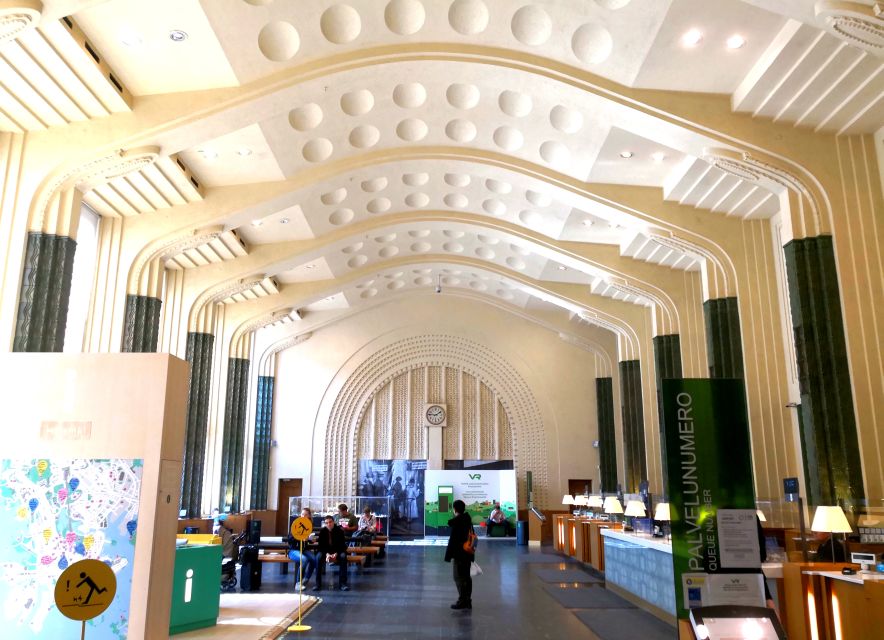
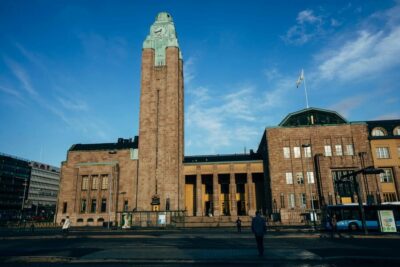
Helsinki’s Central Railway Station is one of the route’s strongest visual stops. It is a major piece of Saarinen’s work and a building that links architecture with movement, modern city life, and national image.
A railway station has to do practical work. People arrive, depart, wait, find their way, and meet others. At the same time, an important station can act as a public symbol. The tour helps you consider both sides of that role, rather than treating the station as a simple transport building.
The station is also a good place to compare grand scale with everyday use. You can admire its exterior forms, then think about how thousands of people use the building without necessarily noticing its design. That shift in attention is one of the best reasons to take an architecture walk early in your Helsinki stay.
If you arrive in Helsinki by train, this stop becomes especially convenient. You will already have seen the building in practical use, and the guide can give you a new way to look at it. If you are staying elsewhere, the central meeting point and walking route keep the experience easy to fit into a day of sightseeing.
A completely different kind of day:
- Helsinki: Sightseeing Canal Cruise with Audio Commentary
★ 4.5 · 1,299 reviews - From Helsinki: Nuuksio National Park Half-Day Trip
★ 4.8 · 688 reviews - Helsinki: Tallinn Guided Day Tour with Ferry Crossing
★ 4.6 · 670 reviews - Helsinki: Hop-On Hop-Off City Bus Tour
★ 4.2 · 585 reviews
JugendHall and the Pohjola Insurance Building
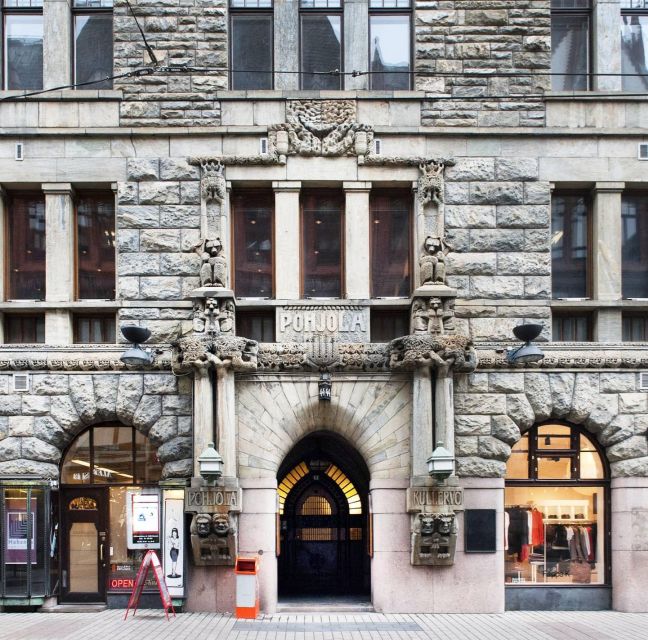
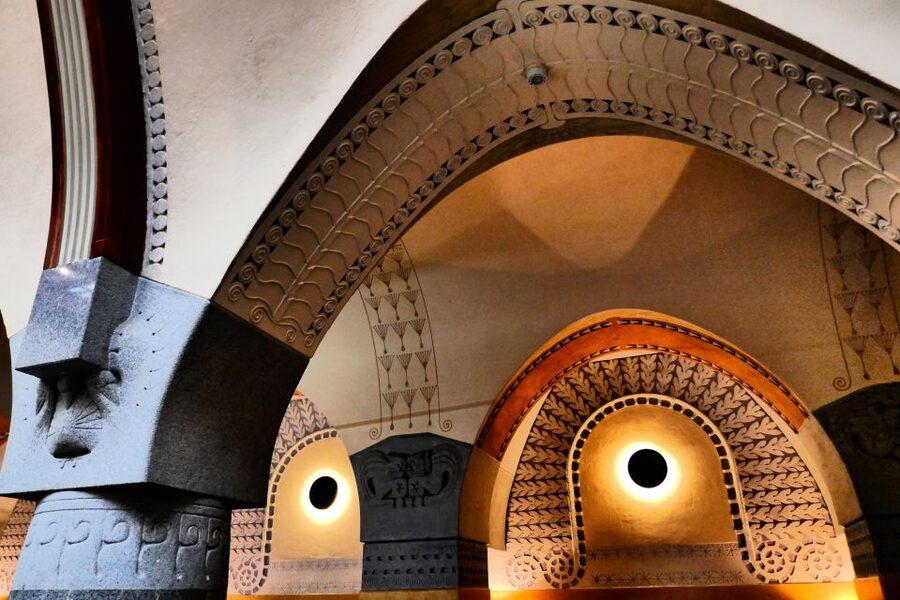
Helsinki’s Art Nouveau and Jugendstil buildings are among its most distinctive sights. JugendHall and the Pohjola Insurance Building offer a chance to see the more expressive side of the city, where decoration, symbolism, and national ideas take a stronger role.
The Pohjola Insurance Building is particularly useful for understanding how architecture can give an organization a public identity. An insurance company might sound dry on paper, but its building can communicate strength, security, local character, and ambition before you know anything about the business inside.
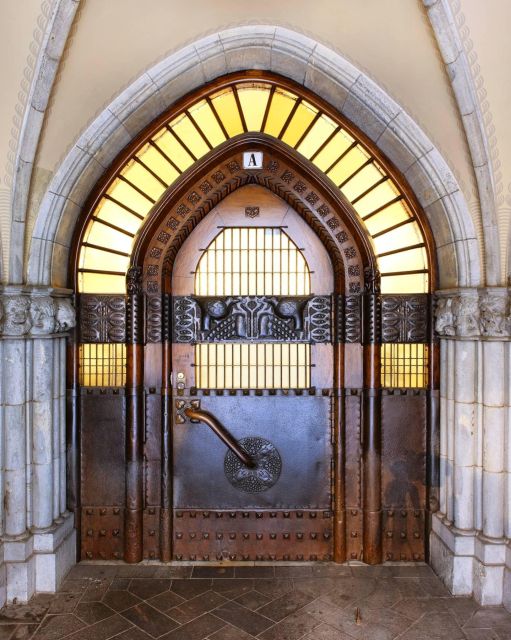
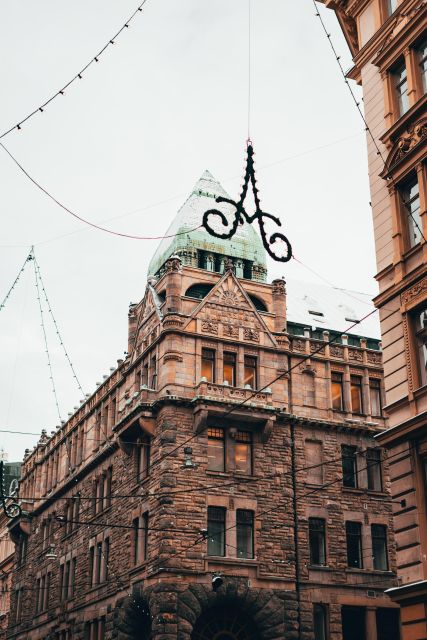
The term Jugendstil can be confusing because it covers a broad family of styles. The tour helps by placing the buildings in context and showing how Helsinki’s version developed. You may notice natural forms, strong materials, unusual details, and references to Finnish culture.
These stops also break up the grand civic tone of Senate Square. Instead of only looking at government and academic buildings, you see commercial architecture with its own message. That range makes the route feel like an exploration of a living city rather than a lesson limited to official monuments.
Academic Bookstore and Aalto’s modern Helsinki
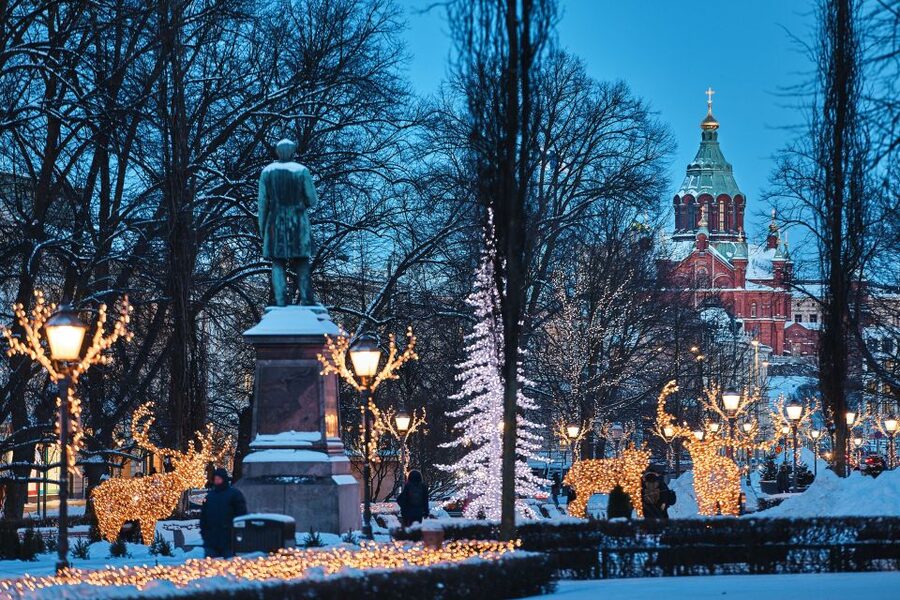
The Academic Bookstore is a key stop for anyone interested in Alvar Aalto. Its design shows how a commercial interior can be both useful and carefully shaped. The building is associated with books and shopping, but the space also asks you to notice light, lines, scale, and the way people move through it.
Aalto’s work is often discussed in terms of modernism, but the tour gives you a chance to consider the human side of his design. Modern architecture does not have to mean cold or empty. A well-planned space can feel calm, clear, and comfortable while still using modern ideas.
This is also a good point to compare an interior with the façades you have seen outside. Helsinki’s architecture is not only about street views. Interiors reveal how designers dealt with light, circulation, public access, and the needs of ordinary users.
The route may take you into several buildings, including the National Library, the railway station, Pohjola, and Aalto-related spaces. Exact access can depend on the day and the circumstances, so you should treat the interiors as an important possibility rather than assume every stop will work in the same way.
Oodi and Helsinki’s contemporary public spirit
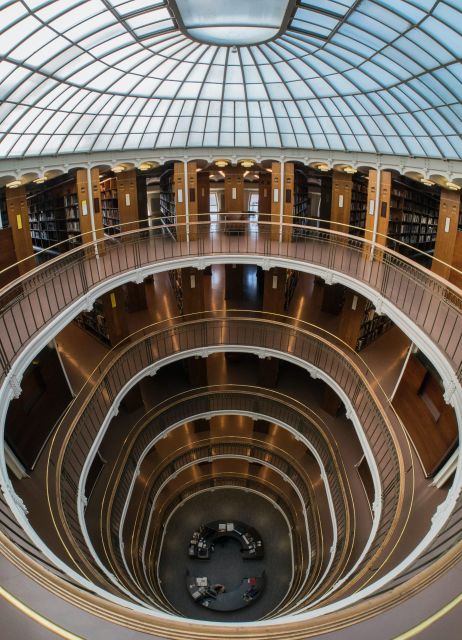
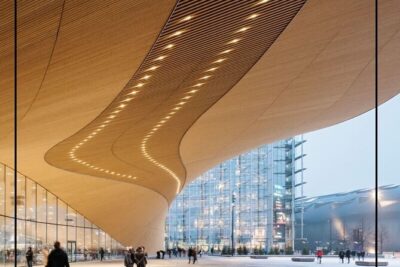
The new public library Oodi gives the walk a clear connection to present-day Helsinki. Its inclusion prevents the tour from becoming a parade of older buildings. You get to see how the city uses contemporary architecture to express current ideas about public space and civic life.
Oodi is especially valuable because it is a library, not simply a monument. It shows how a public building can be designed around people and shared use. The tour places this newer work beside older styles, giving you a way to compare what has changed and what remains important.
This final-period contrast is one of the route’s best features. Helsinki does not preserve its past by freezing the center in one style. Older architecture remains visible, while newer buildings add different answers to modern needs.
You may find that Oodi changes your view of the earlier stops. After seeing a contemporary library, you can look back at the National Library and ask how each period understood knowledge, access, and the public good.
A small group and a guide who adjusts the pace
A maximum of six participants is a real advantage on a subject that depends on looking closely and asking questions. In a large group, you might hear the basic facts but miss the detail that catches your interest. Here, the guide can respond when you want more on architecture, politics, art, or Finnish life.
The strongest praise for Emek centers on his range and manner. He is described as personable, enthusiastic, and able to blend history with culture without making the tour feel heavy. One useful detail is that he has adjusted the experience to suit older participants, including paying attention to comfort during difficult weather.
His flexibility matters because the group may have very different backgrounds. An architect may want technical detail. A first-time visitor may need simple explanations of styles. The tour is designed to adapt rather than force everyone through the same lecture.
The walk is conducted in English. The guide’s command of the language was praised, which matters when discussing specialized terms and subtle differences between movements. Clear explanations make it easier for you to remember what you saw after the tour ends.
Walking distance, weather, and the winter question
You should prepare for 5 to 6 kilometers on foot over three hours. Comfortable shoes are essential, and you should dress for the forecast rather than rely on a mild-looking morning. The tour operates all year, rain or shine.
Winter can be demanding. The experience has operated in temperatures as low as minus 20 degrees Celsius, and the guide has used indoor locations for explanations when the cold became a problem. That is reassuring, but it does not make the walk warm. Bring proper winter clothing if you book between late autumn and early spring.
Rain also changes the feel of an architecture tour. Wet pavement can make details harder to study, and you may spend more time looking for shelter. Still, the route includes interiors and public buildings, so poor weather does not automatically ruin the day.
I would schedule this tour near the start of your Helsinki stay. It gives you a useful map of the center and may help you notice buildings you would otherwise pass without a second glance. If you are sensitive to cold, tired from a long journey, or carrying uncomfortable shoes, choose a day when you are ready for steady walking.
Is $70 a fair price?
At $70 per person, this is more expensive than wandering through central Helsinki with a guidebook. You can see many of the buildings from the street for free, and independent visitors with a strong interest in architecture may prefer to study them at their own pace.
The value comes from the interpretation and the group size. You are paying for three hours with an expert guide, a route that links many architectural periods, and the chance to ask questions in a group of no more than six. You are also gaining access to connections between design, politics, Finnish identity, climate, and everyday life.
I consider the price fair if architecture is one of your main interests or if you want a strong introduction to Helsinki. It is less compelling if you only want a quick orientation walk or prefer to spend most of your time inside museums.
Flexible booking improves the value. You can reserve now and pay later, and cancellation is available without charge up to 24 hours before the start time. Check the available starting times when you book, since the three-hour duration does not come with one fixed daily departure.
Who should take this Helsinki walk?
I would recommend it to first-time visitors who want to understand the city rather than simply photograph it. It is also a good fit for design students, architecture fans, history-minded visitors, and anyone curious about how Finnish society appears in public buildings.
The tour suits people who enjoy conversation. Emek’s approach appears to include questions and adjustments, so you will get more from it if you share your interests and ask when a detail catches your eye.
Older participants can take it too, but you should be honest about the 5 to 6 kilometer distance. The guide has shown care with pace and comfort, yet the activity remains a walking tour on city streets.
Families with young children may find three hours of architecture demanding, though the small group and changing subjects can help. The experience is most rewarding for people who are happy to look closely, listen, and keep moving.
My verdict on Ataman Tours’ architecture experience
Book this tour if you want Helsinki’s buildings to make sense as part of Finnish life. The route brings together Engel’s Neoclassicism, Saarinen’s railway station, Art Nouveau and Jugendstil details, Aalto’s modern interiors, and Oodi’s contemporary public role.
I especially value the small group, the indoor stops, and Emek’s habit of linking architecture with history and politics. The cost is not minor, and the walking distance requires preparation, but the tour offers more than a list of landmarks.
Choose it early in your stay, wear serious walking shoes, and dress for the season. If you do, this can give you a useful visual key to Helsinki for the rest of your visit.
FAQ
How long does the Helsinki Architecture Walking Tour last?
The tour lasts three hours.
How far will I walk?
You should be prepared to walk 3 to 4 miles, or approximately 5 to 6 kilometers.
What language is the tour conducted in?
The tour is conducted in English.
How many people can join the tour?
The group is limited to six participants.
Where is the meeting point?
Meet at the corner of Aleksanterinkatu and Kluuvikatu, outside the Nanso Clothing Store at Aleksanterinkatu 9B. The guide waits at that point.
What buildings are included?
The route includes Senate Square, the National Library of Finland, Central Railway Station, Oodi public library, JugendHall, the Pohjola Insurance Building, Academic Bookstore, and other architectural sites.
Which architects are discussed?
The tour discusses major architects including Engel, Saarinen, and Alvar Aalto.
What should I bring?
Bring comfortable shoes and clothing suitable for the weather.
Does the tour operate in bad weather?
Yes. Tours operate year-round, rain or shine. In very cold conditions, explanations may take place indoors when possible.
Just added in Helsinki
- VIP Highlights Helsinki City PRIVATE Tour★ 5.0 · 1 review
- Wildlife safari with campfire dinner from Helsinki★ 5.0 · 8 reviews
- Traditional smoke sauna experience and national park visit★ 5.0 · 10 reviews
- Private Porvoo Tour & Visit Runeberg’s National Poet House★ 5.0 · 3 reviews
- Helsinki and Porvoo Private Tour by Luxury Car with Guide★ 5.0 · 16 reviews
- E-Bike rental / Self-Guided tour to Seurasaari★ 5.0 · 2 reviews
- Winter kayaking in Eastern Helsinki archipelago★ 5.0 · 3 reviews
- Helsinki Self-Guided Audio Tour★ 3.5 · 14 reviews
Walking Tours, compared.



Ranua Zoo Entry Ticket w/ Walking Tour and Lunch
Read our review →
Small-Group Walking Tour with City Planner Guide
Read our review →
Browse the lists this tour appears in