
REVIEW · SAUNA AND ICE SWIMMING
Helsinki: Floating Experience in a Survival Suit
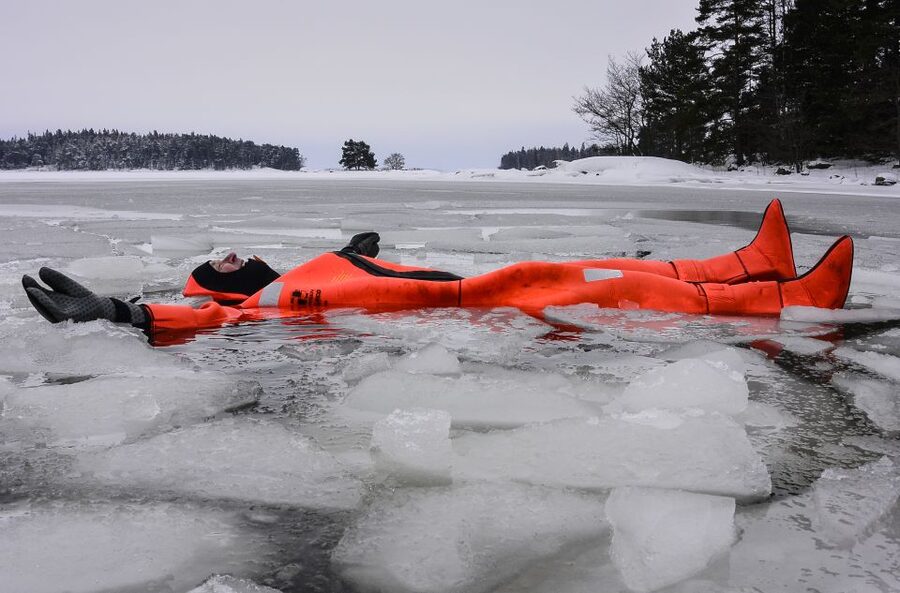
Cold water, warm suit, quiet mind. This Helsinki activity lets you float on the Baltic Sea in a neoprene survival suit while learning practical rescue skills from an English-speaking instructor. I especially like the genuine cold-water setting and the chance to learn about hypothermia rather than simply posing for a novelty photo. The suit keeps you warm and dry, but you still feel the sea, ice, wind, and silence around you.
The activity also works for non-swimmers, which makes it more welcoming than the idea of ice floating might suggest. The main drawback is comfort: the suit can feel tight around the face, and some people find sitting up or looking around tiring on the neck. You also need to be at least 155 centimeters tall and able to manage the physical demands of getting into position in the water.
In This Review
- Key points to know before you book
- What the Helsinki floating experience really is
- Arriving in ordinary winter clothes
- Putting on the survival suit
- Learning cold-water survival before relaxing
- Floating in open water
- Experiencing Helsinki’s ice when conditions allow
- Guides who make the difference
- Comfort, effort, and who should book
- Is $159 a fair price?
- Nine practical questions about the experience
- FAQ
- Do I need to know how to swim?
- What do I wear?
- Is the survival suit included?
- How long does the activity last?
- Is the activity conducted in natural water?
- Does the activity operate in bad weather?
- Is ice guaranteed in winter?
- What language does the instructor speak?
- Are there any height or accessibility restrictions?
- Should you book the Helsinki survival-suit float?
Key points to know before you book
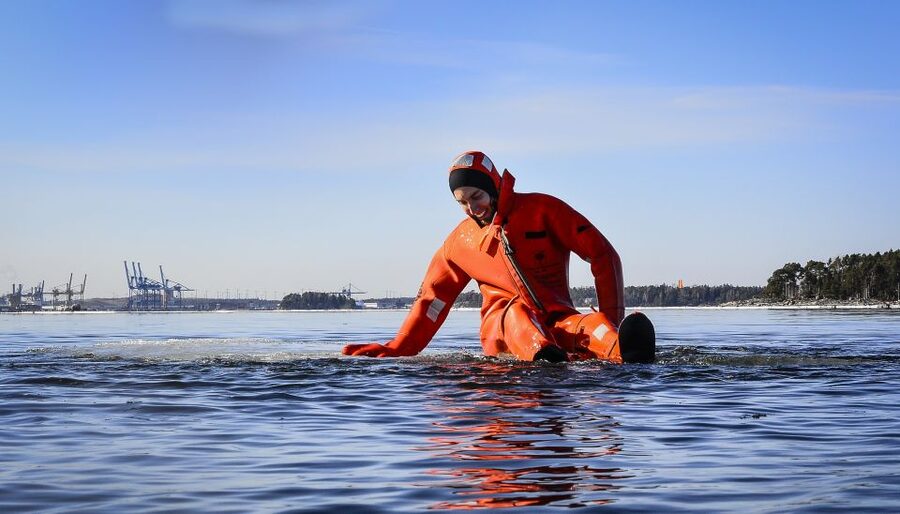
- The water conditions change with the season: Open-water sessions focus on sea rescue, survival, and relaxation, while icy sessions add ice behavior and frozen-sea techniques.
- You do not need to swim: The survival suit keeps you afloat, and the instructors guide you through the process.
- You stay warm and dry: Your own wool pullover and wool socks are recommended beneath normal winter clothing.
- The session lasts 90 minutes: That gives you time for instruction, practice, and a long float without feeling rushed.
- The atmosphere is unusually calm: Once you close your eyes and settle into the water, Helsinki can feel far away, even when you are near the city.
- Guides add a personal touch: Olli, also called Oli in some feedback, has been praised for clear explanations, patience, encouragement, and taking photos and videos.
What the Helsinki floating experience really is
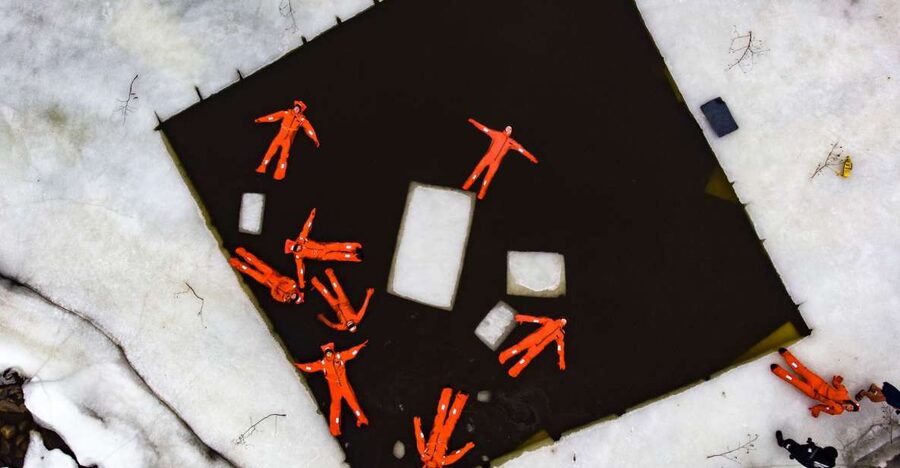
This is not a regular swim, spa treatment, or quick dip in cold water. It is a guided survival and relaxation session conducted in natural water conditions around Helsinki in the Uusimaa region.
You put on a neoprene survival suit designed to keep you warm and dry. The suit also helps you float, so swimming ability is not required. Your instructor then explains how the suit works, what cold water does to the body, and how to respond in a real sea-survival situation.
That combination is the reason I find this activity more worthwhile than a simple cold-water photo opportunity. You get the unusual sensation of floating in the Baltic while also learning why cold-water safety matters. The experience has a practical side, but it is not delivered like a classroom lesson. There is time to relax, play with the ice in winter conditions, and enjoy the strange pleasure of being weightless in freezing water.
The activity receives a 4.9 rating from 117 reviews, with repeated praise for the instructors, safety guidance, and the suits’ ability to keep participants comfortable.
More Sauna and Ice Swimming in Helsinki
- National Park Hike & Finnish Smoke Sauna Experience with Campfire Lunch
★ 5.0 · 182 reviews - From Helsinki: Hike and Sauna in Sipoonkorpi National Park
★ 4.9 · 85 reviews - Helsinki: Bike or E-Bike Tour, BBQ, Sauna, Parks, and Forest
★ 4.8 · 71 reviews
Arriving in ordinary winter clothes
You do not need specialist equipment for the meeting point. Come in comfortable clothing and normal winter street wear. The most useful preparation is to wear your own wool pullover and wool socks under the survival suit.
Arrive 15 minutes before the scheduled start. The exact location may change if wind or ice conditions make another site safer, so keep an eye out for messages from the provider. This is a natural-water activity, not a controlled indoor attraction, and the meeting arrangements reflect that.
Alcohol and drugs are not allowed. That rule is especially sensible here because the session includes cold-water instruction, movement in a survival suit, and advice about rescue situations.
The activity runs in rain and other weather, with no stated weather restrictions. That means you should not book this expecting a polished indoor backup plan. You are coming to meet the water as it is. For some people, that is the whole appeal. For others, it is worth considering carefully before paying.
Putting on the survival suit
The suit is the key to making this possible. Once you are in the neoprene suit, you can enter cold water without feeling the immediate shock you might expect from a normal swim.
The protection is impressive, but the suit is not ordinary clothing. One participant found the area around the face uncomfortable, while another noted that keeping the head raised or trying to sit up could put strain on the neck. You should expect some awkwardness while learning how to move.
That awkward feeling is part of the lesson. A survival suit changes your balance and position in the water. You are not simply floating in a swimsuit. The instructor shows you how to stay calm, how to position yourself, and how to handle basic movements safely.
If you are nervous, tell the instructor early. The experience is designed for people without swimming experience, and the guides are repeatedly praised for being patient and reassuring. One non-swimmer said the guidance made it possible to float for about 45 minutes without trouble.
Learning cold-water survival before relaxing
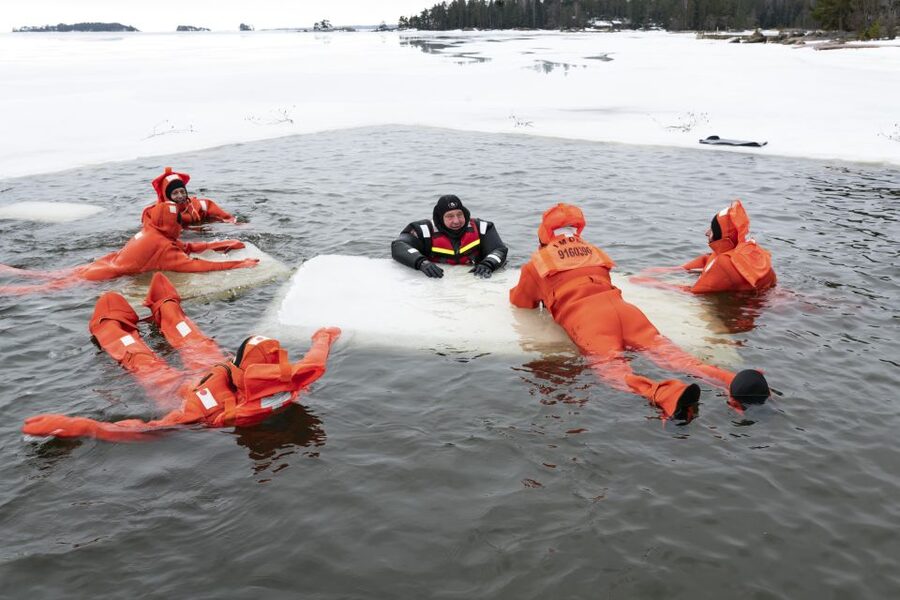
The educational section gives the activity its purpose. You learn about sea rescue, survival suits, hypothermia, and the body’s reaction to cold water. You also hear about the possible benefits of starting winter bathing, although the session itself is not a lesson in building a personal bathing routine.
In open-water season, the teaching centers on rescue at sea, survival techniques, and relaxation. You may practice actions such as sitting up in the suit or working on self-rescue. One participant particularly enjoyed trying a self-rescue exercise after the instructor explained what to do.
In icy conditions, the focus shifts toward how ice behaves and how it affects a survival situation. You may walk on the frozen Baltic Sea, enter water through the ice, or break a piece of ice as part of the supervised experience. The precise conditions depend on nature, so no two visits can be exactly alike.
This instruction is useful even if you never expect to fall into the sea. Cold water can cause panic quickly, and the session teaches you to slow down, breathe, and think. The information is practical rather than abstract, and guides such as Olli and Leif have been praised for explaining the risks in a calm, friendly way.
A completely different kind of day:
- Helsinki: Sightseeing Canal Cruise with Audio Commentary
★ 4.5 · 1,299 reviews - A Finntastic Walking Tour in Helsinki
★ 5.0 · 700 reviews - From Helsinki: Nuuksio National Park Half-Day Trip
★ 4.8 · 688 reviews - Helsinki: Tallinn Guided Day Tour with Ferry Crossing
★ 4.6 · 670 reviews
Floating in open water
Once the safety briefing is complete, the activity becomes much quieter. You lie back on the surface and let the suit support you. With your eyes closed and your breathing slow, the sea becomes a gentle rocking space instead of something threatening.
The amount of time in the water can vary with the conditions and the group, but participants have described floating for roughly 35 minutes, 45 minutes, and even close to an hour. The activity lasts 90 minutes in total, so you have time for instruction and water practice rather than being pushed straight into the float.
The striking part is the contrast. You are in cold Nordic water, yet the suit keeps you warm and dry. You can hear the water and wind, but the experience itself can become remarkably still. This is the portion I would value most if you like sauna culture, winter bathing, or simple moments of quiet.
There is also a lighthearted side. The suit makes normal movements feel unusual, and groups often treat the water as a place to experiment, laugh, and try the survival techniques. It is relaxing, but not passive from start to finish.
Experiencing Helsinki’s ice when conditions allow
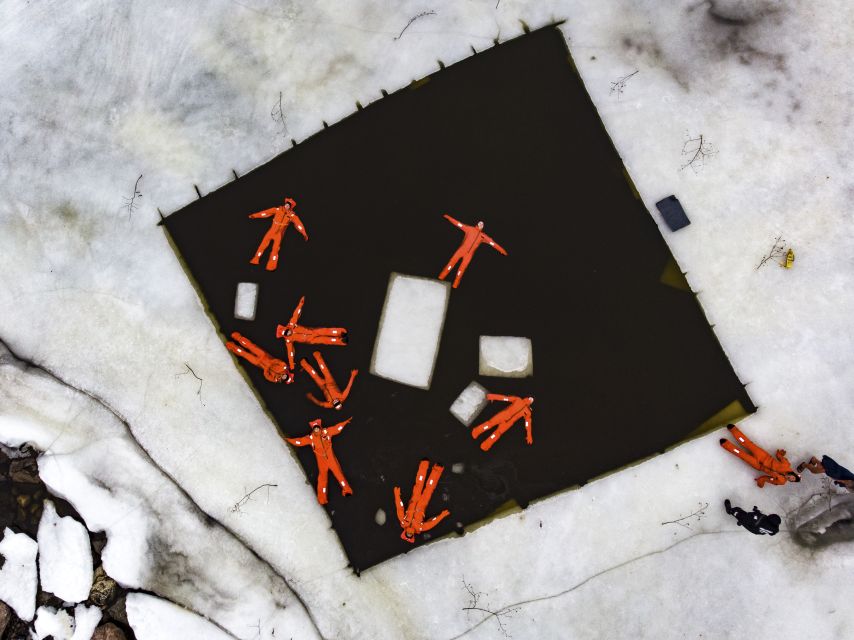
Winter conditions can add a memorable second act. If the sea is frozen, you may walk on the ice before entering the water. The activity can include stepping into an opening, floating beside the ice, and taking part in supervised challenges connected with survival.
One group described walking on the frozen Baltic, jumping into the water, and breaking a large piece of ice. That kind of experience depends entirely on the season and current conditions. Some winter dates have no ice sheets at all, and those sessions still focus on floating and cold-water safety.
This uncertainty is important. If your main goal is to walk on sea ice, you cannot treat that as guaranteed. If you are happy with the core experience of floating in a survival suit, the changing conditions become a bonus rather than a disappointment.
The ice also gives the instructor more to explain. You learn that frozen water is not simply a solid surface to admire. Its behavior affects how you move, where you enter, and how you respond if the ice breaks. The session turns a dramatic winter scene into a practical lesson.
Guides who make the difference
The instructor can make or break an activity involving cold water. Here, the strongest praise is directed toward the people leading the session.
Olli, also referred to as Oli, is frequently singled out for his clear explanations, friendly manner, and ability to help nervous participants feel secure. He has also taken photos and videos during sessions and shared them afterward. That is a thoughtful extra, especially if you are visiting Helsinki alone or do not want to hand your phone to another participant.
Leif has also been praised for making the session comfortable and conversational while teaching sea-rescue skills. Patrik received similar praise for creating a memorable ice-floating experience.
The teaching style appears to balance seriousness with fun. You learn about hypothermia and rescue without being frightened into paying attention. That matters because you need to feel safe enough to relax, but alert enough to take the instructions seriously.
Large groups can still enjoy the activity. A group of 13 people, including participants of different ages and backgrounds, reportedly had a good time. Still, a bigger group may feel less personal than a small booking. On one occasion, two people had what felt almost like a private session, so group size can affect the atmosphere.
Comfort, effort, and who should book
You do not need to know how to swim, and you do not need previous experience. That makes this a good choice if you want to try Nordic winter bathing but feel uneasy about open water.
It suits solo visitors, couples, families with older children, and groups looking for something beyond museums and city walks. The minimum height is 155 centimeters, and people under five feet one inch are not accepted. The activity is not suitable for people with mobility impairments.
You should also be comfortable with some physical effort. The suit can make it harder to change position, paddle, sit up, or look around. One participant described it as something of a workout, especially around the neck. You will not be swimming laps, but you should still expect to use your body.
The experience is a strong match for you if you like:
- Winter bathing and unusual outdoor activities
- Practical safety instruction
- Quiet time in nature
- A supervised challenge that does not require swimming skills
- Seasonal experiences that change with ice and weather
It may not suit you if you want a warm, dry sightseeing activity, dislike restrictive clothing, or need fully accessible facilities. The natural setting is central to the experience, so comfort is never quite the same as it would be at a spa.
Is $159 a fair price?
At $159 per person, this is not a budget activity. You are paying for a 90-minute guided experience, a survival suit, instruction, safety supervision, and a setting that cannot be recreated easily at home.
The value depends on what you compare it with. If you see it as a short swim, the price may feel high. If you see it as a guided cold-water lesson, a seasonal Helsinki experience, and a peaceful float combined in one outing, the cost becomes easier to justify.
The suit and instructor are included, so you do not need to buy special gear. Your main preparation is comfortable clothing, with wool layers recommended. The strongest value comes from the teaching and the unusual conditions, not from the length alone.
I would book it as a special Helsinki activity rather than a routine excursion. It is especially easy to justify if you have already seen the main sights and want something tied to Finnish attitudes toward cold water, winter, and practical outdoor skills.
You can cancel up to 24 hours before the start for a full refund, and you can reserve now and pay later. Those policies help reduce the risk when your Helsinki schedule is still changing.
Nine practical questions about the experience
FAQ
Do I need to know how to swim?
No. Swimming ability or previous experience is not required.
What do I wear?
Wear comfortable clothes. Your own wool pullover and wool socks are recommended under the survival suit, and you can arrive in normal winter street wear.
Is the survival suit included?
Yes. The survival suit and an instructor are included in the price.
How long does the activity last?
The full experience lasts 1.5 hours, or 90 minutes.
Is the activity conducted in natural water?
Yes. The activity always takes place in natural conditions and in the water.
Does the activity operate in bad weather?
Yes. There are no weather restrictions listed, and the activity operates rain or shine.
Is ice guaranteed in winter?
No. Ice depends on current natural conditions. Winter sessions may include ice, but some take place without ice sheets.
What language does the instructor speak?
The instructor speaks English.
Are there any height or accessibility restrictions?
The activity is not suitable for people with mobility impairments or anyone under 155 centimeters tall.
Should you book the Helsinki survival-suit float?
I would book this if you want a Helsinki experience that is unusual, practical, and closely tied to the Finnish outdoors. The best part is not simply floating in cold water. It is learning how to stay calm, understanding what cold water does to the body, and then enjoying the strange peace of being warm and weightless on the Baltic Sea.
Book with realistic expectations. Ice is not guaranteed, the suit may feel awkward around the face and neck, and the activity is not designed for people with mobility impairments. But if you can manage those limits, the combination of rescue instruction, seasonal ice conditions, patient guides, and genuine quiet makes the $159 price easier to defend. It is a memorable choice for a Helsinki day when you want to do more than look at Finland’s winter from behind a window.
Just added in Helsinki
- VIP Highlights Helsinki City PRIVATE Tour★ 5.0 · 1 review
- Wildlife safari with campfire dinner from Helsinki★ 5.0 · 8 reviews
- Traditional smoke sauna experience and national park visit★ 5.0 · 10 reviews
- Private Porvoo Tour & Visit Runeberg’s National Poet House★ 5.0 · 3 reviews
- Helsinki and Porvoo Private Tour by Luxury Car with Guide★ 5.0 · 16 reviews
- E-Bike rental / Self-Guided tour to Seurasaari★ 5.0 · 2 reviews
- Winter kayaking in Eastern Helsinki archipelago★ 5.0 · 3 reviews
- Helsinki Self-Guided Audio Tour★ 3.5 · 14 reviews
Sauna and Ice Swimming, compared.
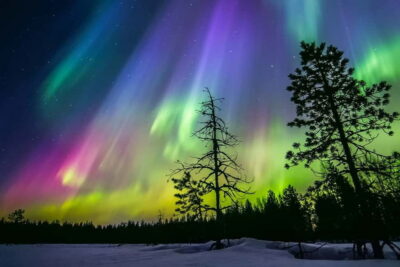
Ice Floating in Forest Lake with Aurora Borealis
Read our review →
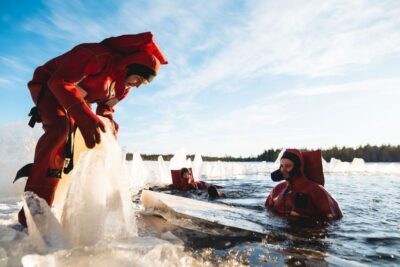
Daytime Ice Floating Rovaniemi, Frozen Lake Experience
Read our review →
National Park Hike & Finnish Smoke Sauna Experience with Campfire Lunch
Read our review →
Best Of Lapland: Sauna, Ice swimming, Dinner & Northern Lights
Read our review →
Sauna & Ice Swimming Tour with Dinner and Aurora
Read our review →
Aurora Arctic Ice Floating in Rovaniemi, Small-group
Read our review →
Browse the lists this tour appears in