

REVIEW · WALKING TOURS
Helsinki Walking Tour at Helsinki Architecture
Architecture gives Helsinki its character. This three-hour walk links grand squares, Finnish design landmarks, and modern public buildings in a small group of no more than six people. I like the way it mixes famous sights with less obvious interiors, and I like that guides such as Zana and Zara bring in Finnish history and daily life, not just dates and architects. The main drawback is simple: you cover a lot of ground, and several interiors close on weekends.
The $57.61 price is fair if you want a guided introduction rather than a quick look at Helsinki’s center. You get an English-speaking local guide and a route that reaches Senate Square, Oodi, the railway station, Aalto’s Academic Bookstore, and other major buildings. Admission to the cathedral, Kamppi Chapel, and Amos Rex is not included, and food, drinks, transport, and gratuity are extra.
This is a good first-day activity, especially if you enjoy buildings, city planning, and the story behind a place. Wear comfortable shoes, check the weekday schedule, and expect a brisk walk with plenty of stops for explanation and questions.
In This Review
- Key points to know before booking
- Why this Helsinki walk works as a first introduction
- Senate Square and Helsinki Cathedral set the tone
- The National Library and Jugendsali reveal Helsinki’s interiors
- Esplanadi and Rautatalo move from public life to modernism
- Academic Bookstore is the clearest Alvar Aalto stop
- Sanomatalo, Fazer Café, and the railway station
- Oodi changes what you expect from a library
- Kamppi Chapel offers a quiet pause
- Amos Rex and the wider contemporary art district
- The National Theatre, Pohjola, Ateneum, and Finlandia Hall
- Price, pace, and what the $57.61 covers
- Who should book this architecture walk
- Should you book it?
- FAQ
- Where does the Helsinki architecture walking tour start?
- Where does the tour end?
- How long does the tour last?
- How much does the tour cost?
- What language is the tour offered in?
- How large is the group?
- Is food or drink included?
- Are entrance fees included?
- What happens if the weather is poor?
Key points to know before booking
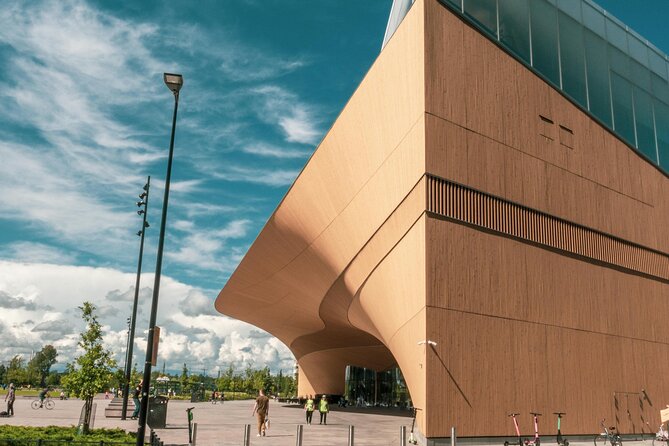
- A small group of six or fewer makes it easier to ask questions and follow the guide through busy central streets.
- Oodi is the tour’s modern highlight, showing how a public library can serve as a social and cultural space, not just a room full of books.
- Alvar Aalto appears in two important stops, the Academic Bookstore and Finlandia Hall.
- Several landmark interiors may be unavailable on weekends, including the National Library, Rautatalo, and Kamppi Chapel.
- The route covers Helsinki’s central architectural story, from Senate Square and the cathedral to Kiasma, Amos Rex, and contemporary public buildings.
- Comfortable shoes matter, since the full route involves substantial walking over about three hours.
Why this Helsinki walk works as a first introduction
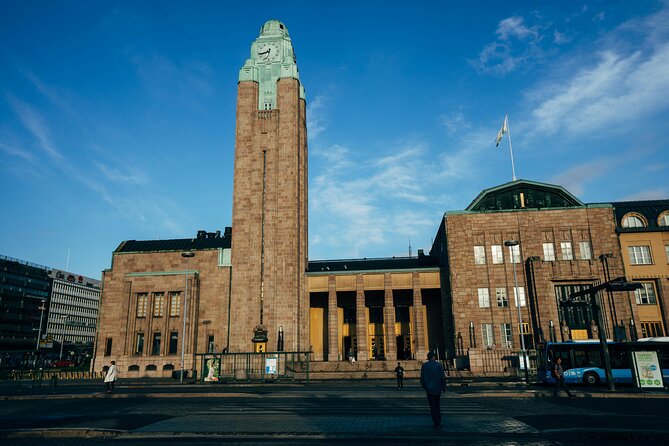
The tour begins on Kluuvikatu and ends back at the meeting point. That central start makes sense: Helsinki’s best-known architectural sights are close enough to connect on foot, yet different enough to show how the city changed over time.
I like this approach because you are not simply handed a list of buildings. You move from the formal center of the old city to commercial interiors, cultural institutions, transport landmarks, and new public spaces. The route gives you a useful timeline without turning the walk into a lecture.
The group limit of six is one of the strongest features. A small group gives the guide room to adjust the pace and answer individual questions. Previous ratings give the experience 4.6 out of 5, and 90 percent of customers recommend it. The most praised qualities are the guides’ clear explanations, their ability to connect architecture with Finnish culture, and the personal feel of the walk.
Guides named in the feedback include Zana and Zara. Both were praised for making the subject approachable and for discussing more than façades. You can expect questions about how buildings are used, what they say about Finnish society, and how Helsinki has developed.
More Walking Tours in Helsinki
- A Finntastic Walking Tour in Helsinki
★ 5.0 · 700 reviews - Epic Helsinki: English Speaking Walking Tour
★ 4.9 · 192 reviews - Helsinki walking tour with a city planner
★ 5.0 · 175 reviews
Senate Square and Helsinki Cathedral set the tone
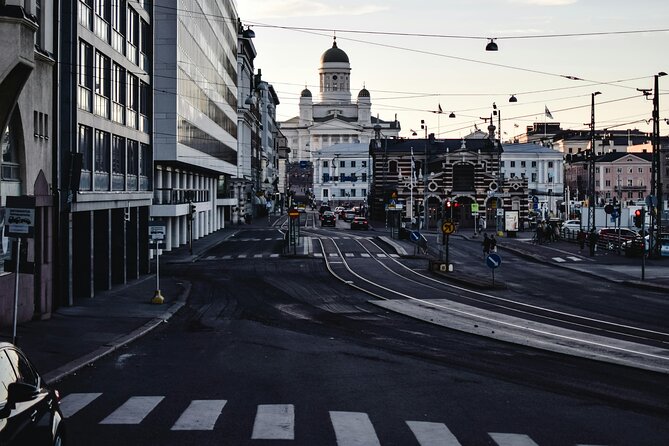
Senate Square is the natural opening chapter. It is described as the place where modern Helsinki’s story begins, and the guide uses the three major buildings around the square to explain the city’s formal center.
You will spend about 15 minutes here. That is enough time to look around, hear the basic context, and understand why the square is such an important reference point for the rest of the route. The square is also a useful orientation stop if you are new to Helsinki.
The next stop is Helsinki Cathedral, the city’s best-known landmark. The planned visit inside is short, about five minutes, so do not expect an extended religious tour. Instead, the guide introduces the building and offers a glimpse into Finland’s religious outlook.
Admission is not included, so you should be prepared for a possible entrance charge. Since the visit is brief, the cathedral works best as part of the larger route rather than as the sole reason to book the experience.
The National Library and Jugendsali reveal Helsinki’s interiors

The National Library of Finland is one of the tour’s most attractive buildings. You get about 15 minutes to see it and hear why its interior and architectural design matter.
This is an important practical point: the National Library is closed on Saturday and Sunday. If you care about seeing the inside, a weekday booking is the safer choice. The tour can still offer plenty on a weekend, but the experience loses some of its interior focus when doors are shut.
Jugendsali offers a different kind of architectural interest. Its decorations, ornaments, painted details, stone sculptures, and original furniture were designed by Valter Jung. The stop lasts around 10 minutes, giving you time to notice the details rather than only glance at the building from outside.
I find this part particularly useful for anyone who likes design on a human scale. The National Library presents a formal, grand interior, while Jugendsali draws attention to decoration, furnishings, and craftsmanship.
Esplanadi and Rautatalo move from public life to modernism

Esplanadi Park is Helsinki’s main boulevard and a center of city life throughout the year. The 10-minute stop gives the guide a chance to explain how public space works in Helsinki, while you get a short break from looking upward at buildings.
The route then reaches Rautatalo, a building regarded as a milestone in Finnish architecture. The planned stop is only five minutes, so the guide will likely focus on its place in the city’s architectural development rather than offer a long interior visit.
Rautatalo is closed on Saturday and Sunday. That makes the weekday route more rewarding for anyone interested in seeing both the outside and inside of Helsinki’s key buildings. Before booking, decide if weekday access matters to you, especially if architecture is your main reason for taking the walk.
A completely different kind of day:
- Helsinki: Sightseeing Canal Cruise with Audio Commentary
★ 4.5 · 1,299 reviews - From Helsinki: Nuuksio National Park Half-Day Trip
★ 4.8 · 688 reviews - Helsinki: Tallinn Guided Day Tour with Ferry Crossing
★ 4.6 · 670 reviews - Helsinki: Hop-On Hop-Off City Bus Tour
★ 4.2 · 585 reviews
Academic Bookstore is the clearest Alvar Aalto stop
The Academic Bookstore, or Akateeminen Kirjakauppa, is one of the route’s strongest stops. It combines literature, culture, retail design, and the work of Alvar Aalto in one central location.
You get about 15 minutes here. That is enough to explore the space with the guide and understand why the building is important, while still keeping the walk moving. The stop also shows how Finnish design appears in everyday public and commercial spaces, not only in museums.
Aalto’s role gives the walk a clear thread. His work appears again later at Finlandia Hall, so the bookstore is more than an isolated building visit. It helps you recognize the design principles and architectural thinking that shape several Helsinki landmarks.
Sanomatalo, Fazer Café, and the railway station

Fazer Café Sanomatalo provides a short five-minute look at Sanoma House and its glass façade. The building sits beside Finlandia Park, north of Helsinki Central Railway Station, near Kiasma, Oodi, and the Music Centre.
The stop connects architecture with Helsinki’s cultural district. You may not spend long inside, but the location helps you understand how several major institutions sit together in the center of the city.
Helsinki Central Railway Station receives about 10 minutes. Four massive statues guard this famous landmark, making it easy to recognize even if you have never studied the building before.
The station is more than a transport stop on this walk. It is a major piece of Helsinki’s public architecture, and the guide uses it to explain the city through a building that people still use every day. I like this kind of stop because it gives a practical building the same attention as a museum or cathedral.
Oodi changes what you expect from a library

Central Library Oodi is the tour’s highlight, and the longest scheduled stop at about 20 minutes. The goal is to challenge your idea of what a library can be.
The description promises a place unlike a traditional library, and the guide uses Oodi to explain modern Finnish public design. You will see why a building dedicated to books can also represent civic life, shared space, culture, and contemporary architecture.
Oodi was the favorite stop for at least one customer, and it is easy to see why. It gives the tour a strong present-day finish to its architectural story, even though more stops follow. The building also works well for visitors who are less interested in historic architecture but want to understand modern Helsinki.
The route also includes the Music Centre, described as a modern architectural masterpiece that houses Finnish orchestras, concerts, and performances. The supplied schedule does not give a separate stop number or visit length, so the exact time there may vary. Still, its place beside Oodi, Kiasma, and Sanomatalo shows how Helsinki groups cultural buildings into shared city spaces.
Kamppi Chapel offers a quiet pause

Kamppi Chapel of Silence is a small but meaningful change of pace. The planned stop lasts five minutes, with time for a moment of calm regardless of your religious beliefs.
The chapel welcomes people seeking quiet and spiritual connection, so the stop is less about architectural analysis and more about atmosphere and purpose. It gives your feet and mind a brief pause during a long urban walk.
Admission is not included. The chapel is also closed on Saturday and Sunday, so weekday scheduling again matters if you want to enter. On a weekend, you may still see the building from outside, but the intended interior experience may not be available.
Amos Rex and the wider contemporary art district
Amos Rex is a contemporary art museum opened in 2018. Its exhibitions combine art, technology, and architecture, making it a useful stop for visitors who want to connect Helsinki’s buildings with current cultural life.
The planned visit lasts about 10 minutes, and admission is not included. That is enough time for an introduction, but not enough for a full museum visit. If Amos Rex interests you, plan a separate return visit and budget for its entry fee.
The route also points toward Kiasma, Finland’s main modern art museum. Kiasma is included as a cultural reference rather than a listed timed stop, so you should not expect a full museum visit during this walk.
This part of the tour is valuable because it keeps Helsinki from feeling like a city frozen in its older architecture. You see how contemporary art, public buildings, and new design share the same central district.
The National Theatre, Pohjola, Ateneum, and Finlandia Hall
The Finnish National Theatre is the oldest Finnish-language professional theatre in the country, founded in 1872. The schedule does not list a separate duration, so the guide’s treatment of it may be brief. Even so, it adds an important cultural layer to the route and shows that Helsinki’s identity is built through language as well as design.
The Pohjola Insurance Building offers one of the most unusual visual details. Its exterior includes gargoyles and grotesques drawn from Finnish folklore and legend. The planned stop is five minutes, which makes this a quick but memorable look at how national stories can appear in stone.
The Ateneum is Finland’s best-known art museum and the home of Finnish art. Its collections run from the 19th century into the modern age, with works that hold a strong place in Finnish cultural memory. Like the theatre and Kiasma, it is presented as part of the city’s wider cultural setting rather than as a full museum visit.
Finlandia Hall is another important Aalto connection. The schedule describes it as Aalto’s legendary creation, with distinctive architecture and design. The exact visit time is not provided, but its inclusion gives the walk a strong architectural endpoint and reinforces the importance of Aalto in Helsinki.
Price, pace, and what the $57.61 covers
At $57.61 per person, this is not the cheapest way to see Helsinki’s center. Its value comes from the guide, the small group, the architectural theme, and the chance to enter selected buildings rather than simply pass them on the street.
You are paying for interpretation. Without a guide, you could visit Senate Square, Oodi, the station, and the Academic Bookstore yourself. The benefit here is learning how those places connect, asking questions, and noticing design details you might otherwise miss.
The tour lasts about three hours, although one piece of feedback describes covering much of the route in two hours. Treat the timing as approximate. The pace may change according to building access, questions, walking speed, and the day’s conditions.
Food and drinks are not included, despite the brief Fazer Café stop. Private transport is also not included, and gratuity is separate. The walk is near public transportation, but the activity itself is on foot.
Who should book this architecture walk
I would recommend it most strongly to:
- First-time visitors who want to understand central Helsinki quickly
- People interested in Finnish architecture, especially Alvar Aalto
- Anyone who enjoys both historic buildings and modern public design
- Visitors who prefer a small group over a large city tour
- Museum and culture fans who want a route linking Oodi, Kiasma, Amos Rex, Ateneum, and Finlandia Hall
- Independent visitors who want help getting oriented during their first day
You should think twice if you dislike long walks, want extended time inside museums, or are visiting only on a weekend and care about every interior listed. Several stops close Saturday and Sunday, and the cathedral, Kamppi Chapel, and Amos Rex may require separate admission.
Book early if your schedule is fixed. The experience is booked around 25 days ahead on average, which suggests that popular dates may not remain open until the last minute.
Free cancellation is available up to 24 hours before the start time. The activity requires good weather, and if poor conditions cancel it, you are offered another date or a full refund.
Should you book it?
Book this tour if you want Helsinki explained through its buildings, with a guide who can connect architecture to history, culture, and Finnish life. The small group, strong guide feedback, and excellent mix of old and new make the price reasonable for a first look at the city.
Choose a weekday if possible. You will have a better chance of seeing the National Library, Rautatalo, and Kamppi Chapel open. Wear comfortable shoes and save a separate visit for any museum that catches your attention. For a compact, thoughtful introduction to central Helsinki, this walk is a solid choice.
FAQ
Where does the Helsinki architecture walking tour start?
The tour starts on Kluuvikatu in Helsinki, Finland.
Where does the tour end?
The activity ends back at the meeting point.
How long does the tour last?
The tour lasts approximately three hours, though the exact timing can vary.
How much does the tour cost?
The listed price is $57.61 per person.
What language is the tour offered in?
The tour is offered in English.
How large is the group?
The tour has a maximum of six participants.
Is food or drink included?
No. Food and drinks are not included.
Are entrance fees included?
Some stops are free, but admission is not included for Helsinki Cathedral, Kamppi Chapel of Silence, and Amos Rex. The National Library, Rautatalo, and Kamppi Chapel may also be closed on weekends.
What happens if the weather is poor?
The experience requires good weather. If it is canceled because of poor weather, you will be offered a different date or a full refund. You can also cancel for a full refund up to 24 hours before the start time.
Just added in Helsinki
- VIP Highlights Helsinki City PRIVATE Tour★ 5.0 · 1 review
- Wildlife safari with campfire dinner from Helsinki★ 5.0 · 8 reviews
- Traditional smoke sauna experience and national park visit★ 5.0 · 10 reviews
- Private Porvoo Tour & Visit Runeberg’s National Poet House★ 5.0 · 3 reviews
- Helsinki and Porvoo Private Tour by Luxury Car with Guide★ 5.0 · 16 reviews
- E-Bike rental / Self-Guided tour to Seurasaari★ 5.0 · 2 reviews
- Winter kayaking in Eastern Helsinki archipelago★ 5.0 · 3 reviews
- Helsinki Self-Guided Audio Tour★ 3.5 · 14 reviews
Walking Tours, compared.




Ranua Zoo Entry Ticket w/ Walking Tour and Lunch
Read our review →
Small-Group Walking Tour with City Planner Guide
Read our review →

Browse the lists this tour appears in